HDPE water pipes are widely used for municipal water supply, agricultural irrigation, industrial water transmission, rural water systems, and infrastructure projects. Their corrosion resistance, flexibility, impact resistance, and heat-fusion technology make HDPE an efficient solution for both above-ground and buried water pipelines.
However, the performance of an HDPE pipeline depends not only on the quality of the pipe itself but also on proper installation, connection, alignment, trench preparation, and testing.
A correctly installed HDPE pipeline can provide reliable long-term service while minimizing the risk of leakage and maintenance problems.
In this guide, Henan Lukuang Industry Co., Ltd. explains the basic procedures for installing HDPE water pipes, including preparation, pipe laying, butt fusion, electrofusion, flange connections, testing, and quality control.
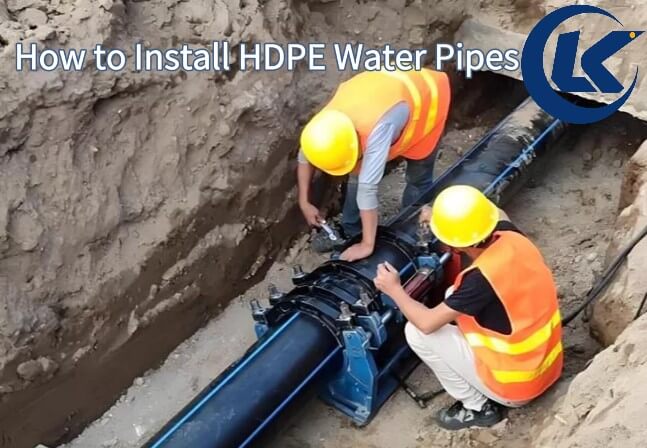
There are several methods for connecting HDPE water pipes. The appropriate method depends on pipe diameter, project requirements, installation conditions, and the type of connection required.
Butt fusion is one of the most widely used connection methods for HDPE water pipelines, particularly for medium- and large-diameter pipes.
During butt fusion, the ends of two HDPE pipes are heated and then pressed together under controlled conditions to create a continuous fused joint.
The actual heating temperature, pressure, heating time, changeover time, cooling time, and other parameters should be determined according to the pipe material, pipe diameter, wall thickness, applicable standard, and fusion equipment manufacturer’s procedure.
Electrofusion uses specially designed electrofusion fittings containing embedded heating elements.
When electrical current is applied, the heating elements melt the HDPE pipe and fitting surfaces, creating a fused connection.
Electrofusion is particularly useful when:
Before electrofusion, the pipe surface must be properly prepared according to the fitting manufacturer’s instructions.
Flange connections are commonly used where an HDPE pipeline needs to connect to:
Unlike butt fusion and electrofusion, flange connections provide a mechanical and detachable connection.
An HDPE stub end or flange adapter is normally fused to the HDPE pipe, while the flange provides the mechanical interface with the other component.
This makes flange connections particularly useful in locations where future disassembly or equipment maintenance may be required.
Measure the required pipe length according to the approved pipeline layout.
When cutting HDPE pipe:
For butt fusion, the pipe ends must be properly prepared before facing.
Cleanliness is one of the most important factors affecting fusion quality.
Before welding:
The pipe ends should be properly aligned before the heating process begins.
The exact fusion parameters should always follow the applicable standard and the equipment manufacturer’s procedure.
A typical butt fusion process includes the following stages.
Place the two pipe ends into the fusion machine.
Adjust the pipes so that they are properly aligned.
Excessive misalignment can reduce joint quality and create unnecessary stress in the pipeline.
Use the facing tool to create clean, flat, parallel pipe ends.
After facing, remove chips and contamination carefully without touching the prepared surfaces unnecessarily.
Place the prepared pipe ends against the heating plate.
The heating temperature and heating time must be controlled according to the applicable fusion procedure.
For many polyethylene fusion systems, the heating plate operates around the commonly specified polyethylene fusion temperature range, but the project-specific fusion procedure should always take precedence rather than relying on a single universal temperature value.
The pipe ends should develop a uniform molten bead before the next stage.
After the required heating period:
The pipe ends should not be twisted or moved during the joining process.
The fused joint should remain undisturbed under the specified conditions until the required cooling period has been completed.
Avoid:
The required cooling time depends on the pipe dimensions, material, fusion procedure, and applicable standard.
Electrofusion requires careful surface preparation and accurate positioning.
Cut the pipe squarely and remove contamination.
The fusion zone should be clearly identified.
Remove the oxidized surface layer from the fusion zone using an appropriate pipe scraper.
This step is critical because the electrofusion process requires a properly prepared polyethylene surface.
Do not touch the prepared fusion area with contaminated hands or tools.
Insert the pipe into the electrofusion fitting to the required insertion depth.
Use alignment clamps when necessary to prevent movement.
Connect the electrofusion machine and enter the required parameters.
The machine then supplies electrical energy to the fitting’s embedded heating elements.
The fitting and pipe surfaces melt and fuse together.
After the fusion cycle has finished, allow the joint to cool according to the fitting manufacturer’s specified procedure.
Do not move or stress the joint during the cooling period.
After the pipe sections have been connected, the pipeline can be positioned in the trench.
The trench bottom should provide a stable and suitable foundation for the pipe.
Where required by the project design, suitable bedding material such as sand or selected fine-grained material can be used.
Avoid direct contact between the pipe and large rocks or sharp objects.
Use suitable lifting equipment for large-diameter pipes.
Do not drag HDPE pipes across rough surfaces or sharp objects.
One of the advantages of HDPE is its flexibility.
The pipe should be installed according to the approved alignment and should not be forcibly stretched or subjected to unnecessary tension.
Backfilling should follow the project specifications.
The material placed directly around the pipe should be suitable for the application and should not contain objects that could damage the pipe.
Proper compaction is particularly important around the pipe zone.
Installation should not be considered complete until the pipeline has been appropriately inspected and tested.
Depending on the project requirements, inspection may include:
For water supply systems, the testing and commissioning procedure should follow the applicable local regulations, project specifications, and relevant standards.
The heating temperature must be controlled according to the approved fusion procedure.
Using an incorrect temperature can affect the quality of the joint.
The required pressure should be maintained throughout the appropriate fusion stages.
Insufficient or excessive pressure can affect joint formation.
Correct alignment is essential.
Misalignment can result in uneven joint geometry and additional stress.
Dirt, moisture, oil, and other contaminants can negatively affect fusion quality.
Proper cleaning and preparation should therefore be treated as essential installation steps.
The joint should remain stable until the required cooling period has been completed.
Premature movement can compromise the connection.
Even though HDPE pipes are relatively easy to install, several common mistakes can affect pipeline performance.
Dust, dirt, moisture, and other contaminants can interfere with the fusion process.
Solution: Clean and prepare the fusion surfaces according to the approved procedure.
Poor alignment can result in uneven joints and unnecessary pipeline stress.
Solution: Use suitable alignment clamps and check the pipe position before fusion.
Applying inappropriate heating, pressure, or cooling parameters may produce an unsatisfactory joint.
Solution: Follow the applicable standard and the fusion machine manufacturer’s procedure.
Moving the pipe before the joint has sufficiently cooled can affect joint integrity.
Solution: Keep the joint stable during the specified cooling period.
Sharp stones and unsuitable bedding can damage the pipe or create localized stress.
Solution: Prepare the trench and bedding according to the project design.
A pipeline should not simply be buried immediately after installation.
Solution: Complete the required inspection, pressure testing, flushing, and commissioning procedures before final completion.
HDPE pipes have become an important option for water infrastructure because of several material characteristics.
HDPE does not rust like conventional steel pipes and has good resistance to many chemicals found in water and soil environments.
HDPE can accommodate certain ground movements and changes in alignment more readily than many rigid pipe materials.
Properly performed butt fusion and electrofusion can create strong, leak-resistant joints.
HDPE pipes are generally lighter than many traditional piping materials, which can simplify transportation and handling.
When properly designed, manufactured, installed, and operated, HDPE water pipelines can provide long-term service.
Henan Lukuang Industry Co., Ltd. supplies HDPE piping solutions for water supply, irrigation, industrial applications, and infrastructure projects.
Our HDPE pipe products can be manufactured in different diameters, pressure classes, SDR configurations, lengths, and material grades according to project requirements.
Our product range includes solutions for:
For international projects, we can also provide customized specifications, fittings, packaging, and export support.
Looking for HDPE water pipes for your next project? Contact Henan Lukuang Industry Co., Ltd. for specifications, pricing, and technical information.
Installing HDPE water pipes correctly requires more than simply connecting two pipe sections.
Successful HDPE pipeline installation depends on proper material inspection, trench preparation, accurate pipe alignment, clean fusion surfaces, correct fusion parameters, adequate cooling, appropriate backfilling, and final pipeline testing.
Butt fusion is widely used for continuous HDPE pipelines, while electrofusion is particularly useful where space is limited or specialized fittings are required. Flange connections are commonly used when connecting HDPE pipelines to valves, pumps, and other equipment.
By following the approved installation procedure and applicable engineering standards, contractors can take full advantage of HDPE’s flexibility, corrosion resistance, durability, and reliable joint performance.
Henan Lukuang Industry Co., Ltd. provides HDPE pipes and complete piping solutions for water supply and infrastructure projects worldwide. Contact us for HDPE pipe specifications and project support.
The appropriate method depends on the pipe size, project design, installation environment, and connection requirements. Butt fusion is widely used for continuous HDPE pipelines, while electrofusion is useful for restricted spaces and specialized connections.
Yes. HDPE pipes are widely used in buried water supply systems. Proper trench preparation, bedding, pipe placement, backfilling, and testing are important for long-term performance.
HDPE fusion is performed within a specified heating temperature range, but the exact temperature and other parameters should follow the applicable standard and the manufacturer’s approved fusion procedure rather than relying on a single universal
temperature.
Yes. Depending on the connection method, installation may require butt fusion machines, electrofusion equipment, pipe cutters, facing tools, alignment clamps, and testing equipment.
The service life depends on factors such as pipe material, operating pressure, temperature, installation quality, and operating conditions. Properly designed and installed HDPE water systems are intended for long-term service.
Yes. Flange adapters, stub ends, and other suitable transition components can be used to connect HDPE pipes to metal pipes, valves, pumps, and other equipment.
Yes. Henan Lukuang Industry Co., Ltd. supplies HDPE pipes for water supply, irrigation, industrial water transportation, and other engineering applications, with specifications available according to project requirements.